
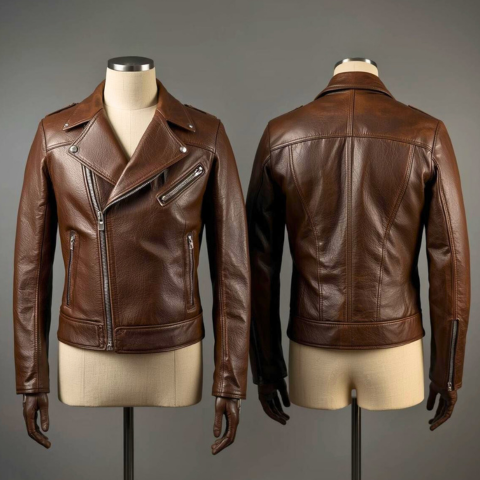
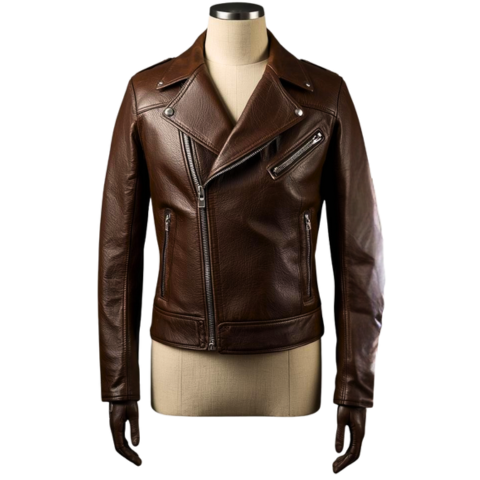
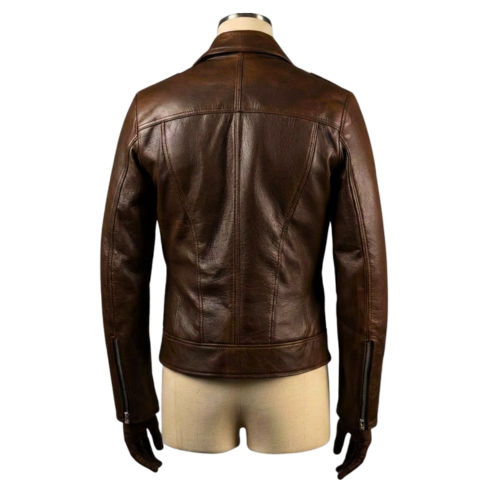
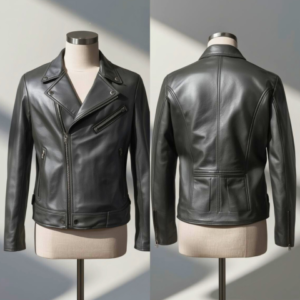
Elevate your premium inventory with our Modern Slim-Fit Brando Jacket. This article reimagines the legendary 1950s silhouette for the contemporary professional market. It is engineered for B2B distributors who require a product that balances the ruggedness of motorcycle culture with the refined tailoring of modern urban fashion.
Constructed from premium-select 1.2mm leather with a semi-matte finish, this jacket offers a more “stealth” aesthetic compared to traditional shiny leather. It features the signature asymmetrical cross-zip but with a streamlined profile, making it a high-demand item for retailers targeting the luxury-lifestyle demographic.
B2B Performance & Commercial Features:
Tailored Silhouette: A refined “Modern Fit” that appeals to a younger, fashion-conscious demographic, ensuring high conversion rates in boutique retail environments.
Component Excellence: Equipped with high-gauge, smooth-action oxidized black or silver hardware that resists tarnishing and provides a premium tactile experience.
Enhanced Lining: Featuring a high-density, diamond-quilted thermal lining for multi-season wearability, increasing the product’s shelf-life and seasonal appeal.
Customization Ready: The minimalist interior and clean back panel are designed for easy integration of private label neck labels and hang-tags.
- What is the Typical Lifespan of a Well-Maintained Leather Jacket?
A well-maintained leather jacket, particularly one made from high-quality hides like those used by Pelnoir, is a true investment piece with an exceptional lifespan. The typical lifespan of a premium leather jacket is:
10 to 20 years or more.
- How Do I Prevent a Leather Jacket From Cracking or Peeling?
Cracking and peeling are usually signs that the leather has dried out or is lower-quality material. You can prevent this by focusing on two main care practices: Conditioning and Proper Storage.
1. Regular Conditioning (Moisturizing)
Cracking occurs when leather loses its natural oils and moisture, becoming brittle.
Apply Conditioner: Use a high-quality leather conditioner, cream, or balm at least once or twice a year (more often in very dry climates).
Replenish Oils: This process, sometimes called "re-fatting," replenishes the oils in the hide, keeping the leather fibers supple, soft, and flexible.
Application: Apply the conditioner with a soft cloth, working it into the leather in circular motions, and then buff the surface gently.
2. Proper Storage and Handling
Use the Right Hanger: Always hang your jacket on a wide, padded, or wooden hanger to support the weight and shape of the shoulders. Thin wire hangers can stretch the leather and deform the shoulder line.
Avoid Direct Heat and Sun: Never store your jacket near direct heat sources (like radiators or fireplaces) or in direct sunlight, as both will quickly dry out the leather and cause cracking and fading.
Allow Air Circulation: Store the jacket in a cool, dark, well-ventilated space. Never use plastic garment bags, which trap moisture and can encourage mold or mildew.7 Use a breathable cotton garment bag if needed.
Note on Peeling
Peeling generally only occurs on bonded leather or faux/PU leather, which are lower-quality materials that have a coating that separates from the fabric backing. Genuine leather (like the full-grain or top-grain used by Pelnoir) will crack if neglected but should not peel.
- Which Leather Jacket Styles Are Trending Globally Right Now?
Globally, the current leather jacket trends are defined by oversized silhouettes, polished professionalism, and a move toward rich, sophisticated neutrals.1 The focus is on versatile and statement pieces that integrate seamlessly into both casual and formal wardrobes.
Here are the top leather jacket styles dominating fashion globally:
1. The Oversized Leather Blazer
Style: Structured yet relaxed, featuring generous volume, a loose fit through the body, and often broader shoulders.
Trend Appeal: This style offers a chic, androgynous look that works for both smart-casual and professional settings. It is favored for its easy layering ability.
2. The Boxy Bomber Jacket
Style: Featuring a shorter length, defined elasticated waist/cuffs, and a slightly cropped, voluminous body.
Trend Appeal: A nostalgic piece making a strong return. It's perfect for a retro, streetwear aesthetic and looks great paired with high-waisted bottoms for a contemporary fit.
3. The Minimalist Trench Coat
Style: Full-length or mid-calf leather coat, often with a clean, unembellished design and a simple tie belt.
Trend Appeal: This is the most luxurious and sophisticated trend, confirming that leather is a high-fashion textile for formal outerwear. It provides maximum drama and coverage for colder weather.
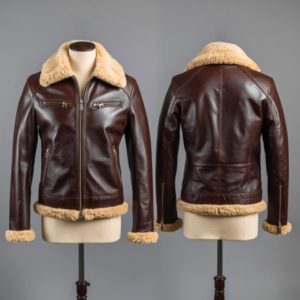
4. Rich Brown Hues
Color Trend: While black remains classic, the biggest color shift is the popularity of deep chocolate, cognac, and chestnut browns.
Trend Appeal: These rich, warm tones offer a softer, more sophisticated alternative to black and pair effortlessly with neutral wardrobes.
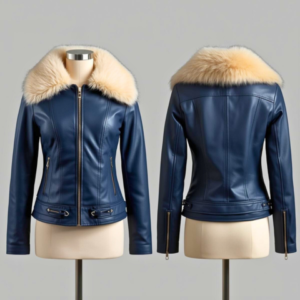
5. Shearling/Faux Fur Linings
Detail: Jackets featuring visible shearling or faux fur collars and linings (sometimes detachable).
Trend Appeal: This merges warmth with rugged texture, most often seen on B-3 Bomber styles or cropped biker jackets, making the jacket highly functional for winter while adding a strong visual element.
- How Do I Choose the Correct Size for a Leather Jacket?
Choosing the correct size for a leather jacket is essential because leather is not as stretchy as fabric. The right size should feel snug initially, as it will naturally relax and mold to your body over time.
Follow these two key steps to ensure you select the best fit:
Step 1: Measure Your Body
Use a flexible tape measure to take these two most important measurements while wearing a thin shirt (not bulky clothing):
Chest/Bust: Measure around the fullest part of your chest or bust. This is the most critical number and determines the jacket's core size.
Shoulders: Measure straight across your upper back, from the outer edge of one shoulder (where the arm meets the shoulder) to the same point on the other side.
Sleeve: Measure from the top of the shoulder (your shoulder measurement starting point) down to where you want the cuff to sit (usually just past the wrist bone).
Step 2: Compare to the Pelnoir Size Chart
Do Not Guess: Never rely on the size you wear in other clothing brands (e.g., your t-shirt size). Different brands use different sizing standards.
Use Our Chart: Always compare your exact body measurements to the specific size chart provided on the product page for the Pelnoir jacket you want to purchase.
Prioritize the Chest: If your body measurements fall between two sizes, prioritize the size that accommodates your chest measurement comfortably.
Key Fit Advice
Fit Goal Advice Initial Feel The jacket should feel slightly snug across the shoulders and chest. It should allow room for only a light shirt or thin sweater underneath. Too Big? If the shoulders droop or the chest area wrinkles significantly when you zip it up, it is likely too big. Leather jackets cannot be easily shrunk. The Break-In Remember that your jacket will soften and slightly conform to your body shape after a few wears, giving you a customized fit. - What is the difference between a Biker Jacket and a Bomber Jacket?
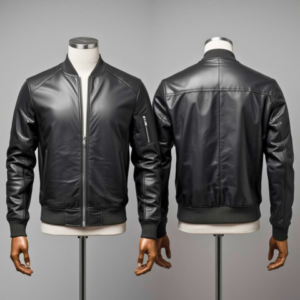
The key differences between a biker jacket and a bomber jacket lie in their cut, closure, and historical origin. The biker jacket (often called a 'moto' or 'double rider') is defined by its asymmetrical zippered front, wide, snap-down lapels, numerous zippered pockets, and a fitted cut, designed historically for protection while riding a motorcycle.1 In contrast, the bomber jacket (or 'flight jacket') has a straight, central zip-up front that goes to a simple, ribbed knit collar, and features ribbed cuffs and waistbands, along with a looser, boxier fit, originally designed for pilots in high-altitude cockpits. In short, the biker jacket is rugged and asymmetrical, while the bomber jacket is structured and symmetrical.
Reviews
There are no reviews yet.