
A practical guide to pairing a leather bomber with denim, chinos, and cold-weather layers, whichever way you wear it.
Table of Contents
Fit comes before any outfit decision
If you’re figuring out how to style a bomber jacket, get the fit right before you even think about what to pair it with — a bomber lives or dies on proportion, more than any other jacket in your closet. The shoulder seam should sit exactly on your shoulder bone, not drape past it. The ribbed hem needs to hit right at your hip, and the cuffs should land on your wrist bone rather than climbing up your forearm.
A fitted or classic-cut bomber holds its shape through the torso without ballooning out, which is what gives it that clean silhouette instead of a boxy, borrowed-from-your-dad look. Pelnoir’s own bomber jacket collection is cut this way on purpose — if you’re shopping for one anywhere, run your hand along the seams and check the leather grain up close, since full-grain leather creases and softens with wear instead of cracking.
If you want the fuller picture on what separates a well-made jacket from a mass-market one, our leather jacket buyer’s guide covers grain type, stitching, and lining in more depth than we can here.
Second-hand bombers are worth trying on too, since older leather has often already broken in around the elbows and collar in a way new leather takes months to match. Just check the zipper pull and the snap closures on the collar first — those tend to fail before the leather itself does.
- Shoulder seam: lines up with your actual shoulder, no overhang
- Hem: sits at the hip bone, never past it
- Cuffs: ribbing rests on the wrist, not the forearm
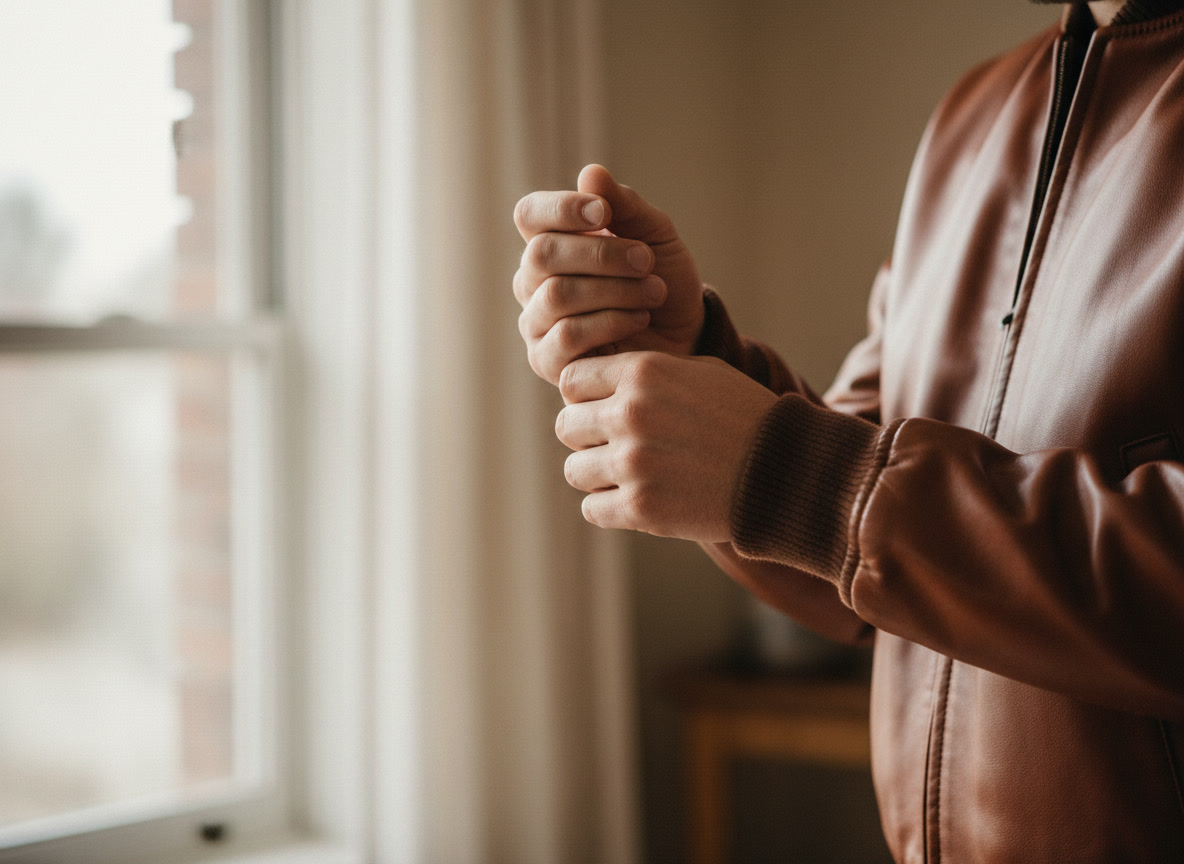
The easiest combination: jeans and a plain tee
This is the pairing that works nine times out of ten. A black or cognac leather bomber over a fitted white tee and straight or slim dark-wash jeans reads clean without looking like you tried too hard. The mistake most guys make here is the tee — anything loose or boxy underneath fights the bomber’s own shape, so keep it fitted or at least snug through the shoulders.
Footwear does a lot of the work too. White leather sneakers keep the look casual and current; if you want something with more edge, a pair of suede desert boots does the job just as well. Browse hundreds of real styled combinations if you want to see the pairing in different colorways before committing.
Cognac and chocolate brown are having a moment
Black will always be the safe choice, but cognac and chocolate brown leather bombers have pulled ahead in 2026 — they photograph warmer, age better, and pair with a wider range of colors without looking flat. Brown leather sits especially well against olive, cream, and washed denim, which makes it the easier jacket to build a whole wardrobe around rather than a one-outfit piece.
If you already own a black bomber and are debating a second jacket, brown is the more versatile buy, not a redundant one. It reads warmer in daylight and doesn’t compete with lighter knitwear the way black sometimes does.
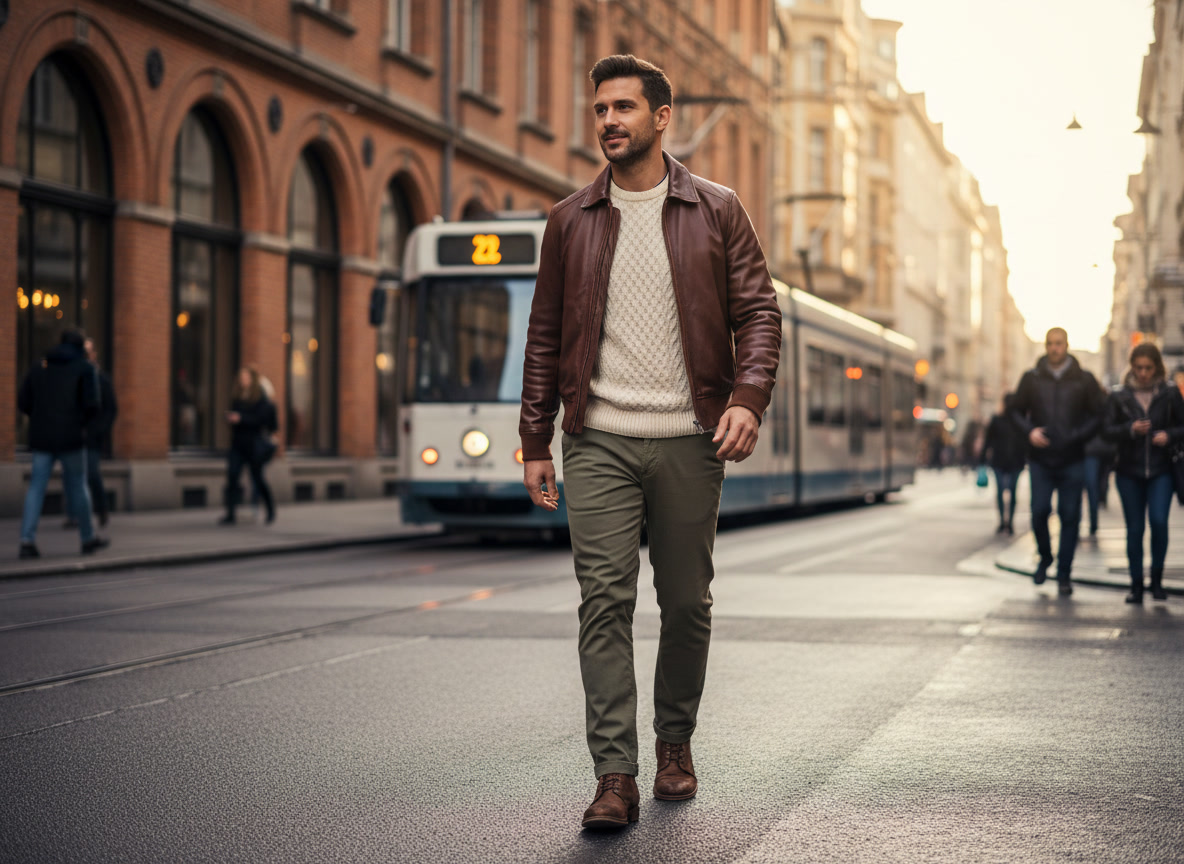
Which color to buy first
If you only own one bomber, black is still the safer starting point — it matches almost everything you already own and doesn’t demand much thought on a rushed morning. But if you’re buying a second jacket, or you already lean toward warmer neutrals in the rest of your wardrobe, cognac or chocolate brown will get more actual wear.
A good middle ground for someone who wants both is a dark oxblood or burgundy bomber, which reads close to black in low light but picks up warmth in daylight photos — useful if you’re someone who cares how outfits look in pictures, not just in person.
Dressing a bomber jacket up
A bomber isn’t locked into weekend duty. Swap the tee for a ribbed turtleneck or a light Oxford shirt, trade the jeans for charcoal dress trousers, and finish with dark brown leather tassel loafers instead of sneakers. The jacket’s boxier cut actually balances tailored trousers well, since the volume up top offsets the cleaner line below the waist.
This combination works for a dinner reservation or a casual Friday office, but it stops working the moment the trousers get baggy — keep them tapered so the whole outfit doesn’t read as two unrelated pieces stacked on top of each other.
Layering for cold weather without losing the shape
A bomber jacket has almost no insulation on its own, so cold-weather layering means going underneath, not over. A merino crewneck or a thin quarter-zip adds warmth without adding bulk that fights the jacket’s fit. Avoid hoodies here — the hood bunches up under the collar and the fabric is usually too thick to sit flat.
A scarf works better than most people expect with a bomber, as long as it’s kept slim and tucked rather than wrapped in a heavy loop that competes with the collar. Wool or cashmere in a neutral tone works best; anything too textured or bulky starts to fight the leather instead of complementing it.
For genuinely cold days, a thermal base layer under the crewneck does more for warmth than adding a second jacket ever will — leather doesn’t breathe the way wool or cotton does, so trapping heat close to your body underneath is more effective than piling on bulk over the top.
Mistakes that make a bomber look cheap
Most styling mistakes with a bomber jacket come down to fit or fabric, not the outfit around it.
- Buying it oversized on purpose — a bomber is meant to sit close, not drape
- Pairing it with baggy or wide-leg pants, which throws off the proportion the jacket depends on
- Ignoring leather care — a bomber that’s never conditioned will crack at the elbows and cuffs first
- Stacking it over another jacket or heavy layer, which distorts the silhouette entirely
- Zipping it all the way up over a collared shirt, which bunches the collar and looks accidental rather than intentional
A little maintenance goes a long way here too. Leather care specialists recommend conditioning every three to six months for jackets in regular rotation, which keeps the surface flexible instead of dry — usually what separates a bomber that still looks good after five years from one that’s cracking at the elbows by year two.
If you’re shopping for your next one, browse Pelnoir’s bomber jacket collection for full-grain options built to hold their shape through repeated wear.
Conclusion
A bomber jacket earns its keep because it moves between registers so easily — jeans and a tee on a Saturday, charcoal trousers and loafers on a Friday, a merino crewneck underneath once it’s cold. Get the fit right first, lean into cognac or brown if you’re buying a second one, and condition the leather every few months so it’s still doing this in ten years. Pelnoir’s bomber jackets are built from full-grain leather specifically to hold up to that kind of regular wear.
Frequently Asked Questions
Can you wear a bomber jacket with jeans?
Yes — it’s the most common pairing. Stick to straight or slim dark denim so the jacket’s boxier shape has room to work without looking bulky.
Are leather bomber jackets in style in 2026?
Yes, and cognac and chocolate brown tones are outperforming classic black this year, especially paired with olive, cream, and denim.
What shirt goes under a leather bomber jacket?
A fitted plain tee for casual looks, or a ribbed turtleneck and light Oxford shirt when you want to dress it up. Avoid anything loose or heavily patterned.
Can a bomber jacket be dressed up for smart-casual occasions?
Yes — pair it with charcoal dress trousers and dark brown tassel loafers instead of jeans and sneakers, and keep the trousers tapered rather than baggy.
How often should you condition a leather bomber jacket?
Every three to six months for a jacket in regular rotation, or every two to three months if you’re in a hot or dry climate.