Craftsmanship & Quality

leather supply chain
Craftsmanship & Quality

The Pelnoir Advantage: End-to-End Global Leather Supply Chain Control

For two decades, I have watched brands succeed or fail based on one thing: control over their manufacturing pipeline. In the complex world of leather goods, a fragmented supply chain is your biggest liability. Dealing with separate tanneries, cutting houses, and stitching factories introduces delays, quality drops, and critical ethical breaches. Therefore, smart Global Leather Supply Chain Management requires a shift from fragmented vendors to a single, vertically integrated partner. This is the Pelnoir Advantage. We do not just stitch your products; we own the process from the raw hide to the final packaged good. This End-to-End Leather Sourcing model drastically reduces manufacturing risk and secures your brand’s reputation. 1. The Core Problem: Fragmentation and Risk Most B2B leather sourcing involves 3-5 separate entities. Each transition point is a risk zone: Hand-Off Point Risk Factor Pelnoir Solution Tannery to Cutter Inconsistent material grade, improper moisture content, delays. Integrated Tanning & QC. We control the hide preparation. Cutter to Stitcher Poor yield management, cutting errors, waste, and component mismatch. In-House Cutting Floor. Zero hand-off errors; perfect alignment with patterns. Stitcher to Logistics Packaging mistakes, final QC lapses, and customs documentation errors. Dedicated Logistics & Final Audit. Single team handles packaging and freight. Consequently, if you lack visibility into these stages, you cannot guarantee quality or delivery time. 2. Pelnoir’s Vertical Integration: A B2B Quality Control Guarantee Vertical Integration Leather means Pelnoir manages every critical step in-house. This complete control is our promise of consistency and ethical compliance. A. Raw Material Mastery (Tanning and Finishing) We select high-grade hides and control the tanning process. Specifically, this allows us to produce custom colors, textures, and temper exactly to your specifications. B. Precision Manufacturing (Cutting and Stitching) Our design and production teams work under one roof. Thus, we ensure maximum precision. 3. Ethical Sourcing and Transparency: Built-in Compliance Today’s global consumer demands Ethical Leather Sourcing B2B. Our integrated model makes compliance a core function, not an afterthought. 4. The Strategic Advantage: Scaling with Confidence This level of operational control translates directly into business benefits, regardless of your brand’s size: Conclusion: Stop Managing Risk, Start Growing Managing a fragmented supply chain is a heavy administrative burden. The Pelnoir Vertical Integration Leather model transforms this process into a clear, single-point solution. We handle the complexity of Global Leather Supply Chain Management so you can focus entirely on design and sales. Ready to gain total control, achieve consistent quality, and partner with a manufacturer dedicated to reducing manufacturing risk? Contact Pelnoir today to secure your End-to-End Leather Sourcing strategy and discuss your next custom collection.

authentic leather guide
Craftsmanship & Quality

Authentic Leather Guide: How Global Buyers Identify Genuine Grades

For global B2B buyers, the term “Genuine Leather” often feels like a promise of quality. However, in the complex world of leather grades, that label is frequently misunderstood and sometimes intentionally misused. Your brand’s reputation, product durability, and profit margins hinge on accurately identifying and sourcing authentic leather grades. Crucially, confusion around grades—from Full-Grain to Bonded—can lead to costly mislabeling and dissatisfied customers. Therefore, we created this definitive guide. It equips global buyers with the knowledge to inspect materials confidently and secure a transparent supply chain. The Four Pillars of Authentic Leather Grades Leather is graded based on which layer of the hide is used and how much it has been processed. Understanding these distinctions is fundamental to effective B2B leather sourcing. 1. Full-Grain Leather: The Pinnacle of Quality Full-Grain Leather is the gold standard. Specifically, it retains the entire natural grain layer, including all imperfections and natural pore structures. This lack of sanding or correction results in the strongest, most durable leather available. 2. Top-Grain Leather: Balancing Strength and Flexibility Top-Grain Leather is the second-highest grade. In this process, manufacturers slightly sand or buff the outermost layer to remove natural blemishes and imperfections. This results in a more uniform and manageable surface. 3. Genuine Leather: The Caveat Emptor Grade The term Genuine Leather is perhaps the most misleading in the global market. In reality, it means the material is technically leather, but it typically comes from the inner, weaker layers (the “split”) or is composed of multiple layers bonded together. 4. Bonded Leather: The Lowest Tier Also known as reconstituted or blended leather, Bonded Leather is the lowest grade. In essence, it consists of leather scraps and fibers that manufacturers grind up and mix with chemical binders, then roll onto a fiber backing. The percentage of actual leather can be minimal (often less than 10%). How Global Buyers Confidently Identify Authentic Grades As a B2B buyer, your ability to identify genuine leather extends beyond reading labels. You must know how to inspect the physical product, especially when sourcing internationally. Inspection Checklist for Quality Control Conclusion: Partnering with Transparency is Your Best Defense Protecting your brand’s promise of quality begins with protecting your sourcing process. Ultimately, the surest way to guarantee your inventory consists of the authentic leather grades you ordered (especially the coveted Full-Grain and Top-Grain) is to partner with a transparent, quality-focused manufacturer. At Pelnoir, we commit to using only high-quality hides and providing full clarity on the grade and tanning process used for every B2B order. We understand that transparency is the foundation of a successful global B2B partnership. Ready to source guaranteed authentic leather grades for your next collection? Contact the Pelnoir team today to discuss your quality requirements and request samples.

defining leather grades what global b2b buyers need to know
Craftsmanship & Quality

Defining Leather Grades: What Global B2B Buyers Need to Know

In the world of global manufacturing and retail, the term ‘leather’ is broad, encompassing materials of wildly varying quality, durability, and cost. For a B2B buyer sourcing products globally, understanding the distinction between leather grades is arguably the most crucial step in the quality control process. The grade you choose dictates your product’s lifespan, aesthetic appeal, price point, and market positioning. Here at Pelnoir, we champion transparency. We believe every global partner should know exactly what they are purchasing. Let’s break down the essential grades of leather, moving from the highest quality to the most processed, so you can make informed decisions for your brand. 1. Full-Grain Leather: The Pinnacle of Quality Full-Grain Leather represents the highest standard of leather quality available globally. It is made from the outermost layer of the hide, just beneath the hair, and has not been sanded, buffed, or snuffed to remove natural marks or imperfections. Key Characteristics: B2B Application: Ideal for luxury goods, premium briefcases, high-end furniture, and products where longevity and status are paramount. Choosing Full-Grain is a statement of enduring quality for your brand. 2. Top-Grain Leather: The Workhorse of the Industry Top-Grain Leather is the second-highest quality leather. It is also taken from the top layer of the hide (the Full-Grain layer), but its surface has been lightly sanded or buffed to remove minor imperfections and give it a more uniform look. It is then often finished with a pigmented coating. Key Characteristics: B2B Application: This grade is highly popular worldwide for wallets, handbags, mid-to-high-end footwear, and products where durability, a refined finish, and cost efficiency must be balanced. 3. Genuine Leather: Understanding the Trade-Offs When a product label simply states Genuine Leather, it technically means the product is made of real leather, but it refers to a much lower quality and is often heavily processed. This grade is made from the layers of the hide that remain after the Full-Grain and Top-Grain layers have been separated. Key Characteristics: B2B Application: Genuine Leather is used for high-volume, cost-conscious products where the material must still technically be ‘real leather’ but primary durability and longevity are not the main concerns. It offers the lowest cost of the three main grades. Why Leather Grades Matter for Global Sourcing As a global B2B buyer, knowing the difference between these leather grades protects your investment and ensures brand integrity. Leather Grade Source Layer Surface Treatment Durability Patina Development B2B Price Point Full-Grain Top Layer None (Natural) Highest Excellent (Deep Patina) Premium Top-Grain Top Layer Lightly Sanded/Coated High Minimal Patina Mid-to-High Genuine Inner Layers Heavily Processed/Coated Moderate/Low Wears Down Economic Partnering with a transparent manufacturer like Pelnoir allows you to specify the exact grade needed for your market, ensuring consistency in quality and meeting global customer expectations. We help you navigate these specifications so your final product perfectly matches your vision, whether you require the rugged luxury of Full-Grain or the uniform consistency of Top-Grain. For more insights, be sure to check out our other blog posts: Ready to define the leather quality for your next collection? Contact the Pelnoir team today to discuss your material specifications and global sourcing needs.

the art of tanning understanding vegetable vs. chrome for global quality
Craftsmanship & Quality

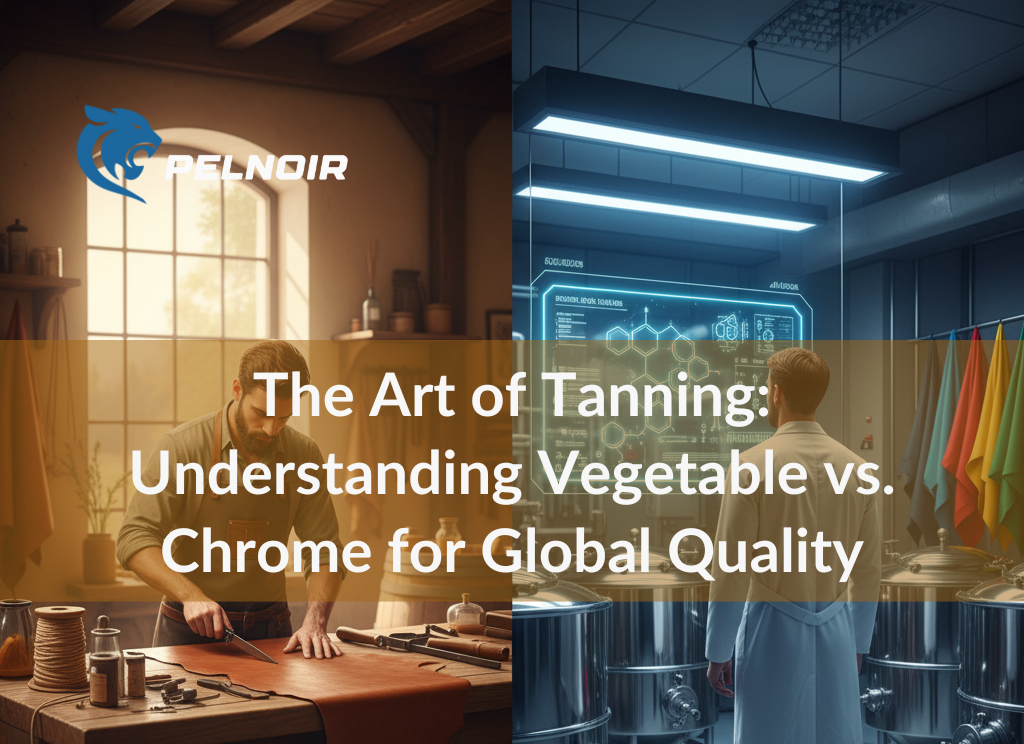
The Art of Tanning: Understanding Vegetable vs. Chrome for Global Quality

The journey of a raw hide transforming into a luxurious, durable leather product is a marvel of ancient craft and modern science. At the heart of this transformation lies the leather tanning process, a critical step that defines the leather’s character, durability, and eventual global quality. For B2B buyers worldwide, understanding the primary tanning methods—vegetable versus chrome—is key to making informed sourcing decisions that align with their brand’s vision and product requirements. Here at Pelnoir, we master both techniques, meticulously choosing the right process to achieve the desired properties for your specific product needs. Let’s delve into these two fundamental methods and compare their unique characteristics. What is Leather Tanning and Why Does it Matter? Tanning is essentially the process of treating animal hides to prevent decomposition and make them durable, flexible, and resistant to water. Without tanning, hides would simply putrefy. This ancient art has evolved, but its purpose remains the same: to create a stable, beautiful, and long-lasting material that can be crafted into products of value. The choice of leather tanning process is a foundational decision that directly impacts the final product’s attributes. It is not merely a technical step, but a strategic one that influences: Vegetable Tanning: The Traditional, Time-Honored Craft Vegetable tanned leather is the oldest and most traditional tanning method, dating back thousands of years. It relies on natural tannins found in the bark, leaves, and fruits of various trees and plants, such as oak, chestnut, and mimosa. The process is a slow and deliberate one, often taking several weeks to months, as hides are submerged in large vats of increasingly concentrated tannin solutions. This method requires a high degree of skill and patience. The result is a material revered for its rich, earthy tones and its firm structure. Vegetable-tanned leather develops a beautiful patina over time, darkening and softening with use to tell a unique story. It’s often used for premium goods where this aging process is a desired characteristic, such as high-end belts, wallets, briefcases, and custom-made footwear. Due to its use of natural components, vegetable tanning is often seen as a more environmentally friendly option, aligning with the values of eco-conscious global brands. Chrome Tanning: The Modern, Fast-Paced Method In contrast to the slow process of vegetable tanning, chrome tanning is the most widely used and efficient method in the modern leather industry, accounting for approximately 80% of all leather produced globally. This process uses a solution of trivalent chromium salts to tan the hides, a method that was first developed in the mid-19th century. The chemical reaction is significantly faster, often taking less than a day to complete. The key benefits of chrome-tanned leather are its unparalleled softness, flexibility, and a wide array of vibrant, uniform colors. It is highly resistant to water, heat, and staining, making it ideal for products that require a high degree of durability and colorfastness. This includes automotive interiors, furniture, apparel, and many types of everyday accessories and fashion goods. Its speed and lower production costs make it a viable option for large-scale, international manufacturing. Which is Right For Your Global Brand? Choosing between vegetable and chrome tanning depends entirely on your product’s purpose and your brand’s values. There is no single “better” option; there is only the right option for your specific needs. Feature Vegetable-Tanned Leather Chrome-Tanned Leather Process Speed Slow (weeks to months) Fast (less than 1 day) Feel & Structure Firmer, more structured Softer, more pliable Durability Very durable, rigid Highly durable, flexible Appearance Rich, earthy tones; deepens with age (patina) Wide range of vibrant, uniform colors Aging Develops a beautiful, unique patina over time Maintains a consistent look over time Common Uses Belts, wallets, luxury bags, footwear Apparel, furniture, car seats, fashion accessories Cost Higher due to time and labor Lower due to efficiency and speed At Pelnoir, we believe that understanding these differences is a crucial step for any global business seeking to source quality leather goods. Our commitment is to provide a transparent manufacturing process and partner with you to select the ideal tanning method that ensures your products meet the highest standards of quality, aesthetics, and sustainability. For an in-depth look at starting your own brand, check out our guide on Private Label Leather. By combining the traditional artistry of Pakistan’s leather heritage with modern, efficient practices, we deliver a product that is not just a material, but a testament to a thoughtful and expert manufacturing process.

Scroll to Top